
How to Increase Jewellery Showroom Sales in 2026: Tips for Retailers & Wholesalers
If you run a jewellery showroom today, you’ve probably felt the pressure.
Gold prices keep rising. Customers are comparing designs online before they even walk into your store. And many retailers are asking the same question:
“Why is my showroom footfall increasing, but my jewellery showroom sales are not?”
The reality is that the jewellery market in 2026 is very different from what it was just a few years ago. Customers are more price-conscious, trend-driven, and experience-focused than ever before. They don’t just walk in to buy gold by weight — they look for design value, lightweight pieces, and collections that fit their budget.
For jewellery retailers and wholesalers, this shift creates both a challenge and a massive opportunity.
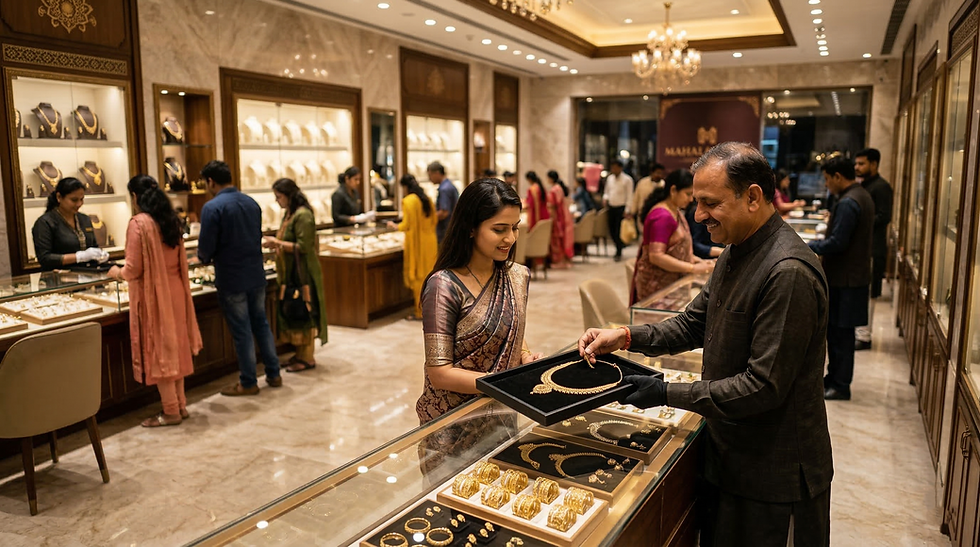
Showrooms that adapt their sales strategies, inventory optimization, and marketing approach are seeing faster retail turnover and stronger margins. On the other hand, stores that continue stocking heavy, slow-moving designs often struggle to increase jewellery sales, even when demand for gold remains strong.
So what actually works today?
How can you increase jewellery showroom sales without increasing inventory risk?
What are the most effective gold showroom sales tips for 2026?
How can retailers boost jewelry store sales even when gold prices fluctuate?
And which strategies help wholesalers and retailers create consistent showroom footfall and higher conversions?
In this guide, we’ll break down the most practical and proven jewellery retail sales strategies for wholesalers and retailers in India. From inventory planning and lightweight gold trends to marketing tactics and B2B sales optimization, you’ll discover actionable ideas that can help your showroom generate faster sales and sustainable growth.
Whether you are a retailer looking to increase gold jewellery showroom footfall in 2026 or a wholesaler aiming to build stronger partnerships with jewellery stores, these strategies will help you position your business for the next phase of the jewellery industry.
Understanding the Jewellery Market Shift in 2026
Before trying to increase jewellery showroom sales, it’s important to understand one simple truth:
The jewellery market in 2026 is not the same market that existed five or ten years ago.
Retailers who recognize this shift are adapting quickly — while others are wondering why their jewellery showroom sales are slowing despite strong consumer interest in gold.
So what exactly has changed?
Let’s break down the key forces shaping jewellery retail today.
Rising Gold Prices Are Changing Buying Behaviour
Gold prices have steadily increased over the last few years. While demand for gold jewellery remains strong in India, buyers are now more calculated and budget-focused.
Instead of buying heavy pieces, customers often ask questions like:
“Do you have something lighter?”
“What designs look premium but cost less gold?”
“Is there a lightweight option in this design?”
This shift is pushing retailers to rethink their gold showroom sales tips and pricing strategies.
Today’s customers want:
Elegant designs with lower gold weight
Affordable pieces they can wear daily
More designs within the same budget
Showrooms that understand this behavior are able to boost jewelry store sales even during high gold price cycles.
Customers Now Research Before Visiting Your Store
Another major shift affecting showroom footfall is digital behaviour.
Most jewellery buyers today don’t walk into a store blindly. Instead, they:
Browse jewellery designs on Instagram or Pinterest
Compare styles across multiple stores
Check reviews online
Visit the showroom only after shortlisting designs
This means jewellery store marketing for higher turnover is no longer optional.
Retailers need visibility through:
Google search (SEO for jewelers in India)
Instagram and social media showcases
WhatsApp catalog sharing
Local search visibility
When done correctly, these digital efforts directly translate into higher showroom footfall and stronger jewellery showroom sales.
2026 Jewellery Trends Are Shaping What Sells
Trends play a bigger role in jewellery buying than ever before. In 2026, several trends are influencing purchasing decisions.
Some of the most important 2026 jewellery trends include:
The yellow gold comeback in modern minimalist designs
Lightweight polki jewellery for bridal and festive collections
Lab-grown diamonds gaining popularity among younger buyers
Daily-wear lightweight gold jewellery for working professionals
Retailers who stock trend-forward gold designs aligned with these shifts often see faster retail turnover.
On the other hand, stores that rely only on traditional heavy pieces may struggle with slow-moving inventory.
The New Retail Reality: Fast-Selling, Smart Inventory
If there is one pattern visible across successful jewellery showrooms today, it’s this:
Fast-moving inventory drives sales.
Instead of stocking fewer heavy pieces, many retailers now prefer:
Fast-selling lightweight gold jewellery
Trend-based collections
Frequent inventory refresh cycles
Design-focused displays
This strategy helps retailers:
Reduce inventory risk
Increase design variety
Improve showroom conversion rates
Maintain consistent jewellery showroom sales growth.

What This Means for Retailers and Wholesalers
The jewellery industry is not slowing down — it’s evolving.
Retailers who adapt their sales strategies, marketing approach, and inventory planning are seeing stronger growth even in challenging price environments.
To successfully increase jewellery sales in 2026, businesses need to focus on:
Smarter inventory decisions
Trend-driven product selection
Better showroom experience
Stronger marketing visibility
In the next section, we’ll explore one of the most powerful yet overlooked drivers of jewellery showroom sales — smart inventory strategies that increase turnover and reduce stock stagnation.
Smart Inventory Strategies to Increase Jewellery Showroom Sales
If your showroom sales are slower than expected, the problem may not always be marketing or footfall.
Sometimes, the real issue is inventory.
Many jewellery retailers unknowingly lock a large portion of their capital into heavy, slow-moving pieces. The designs may be beautiful, but if they sit in the showcase for months, they quietly reduce your retail turnover.
So the real question becomes:
Is your inventory helping you increase jewellery showroom sales — or slowing them down?
The most successful jewellery retailers in 2026 are not necessarily stocking more gold. Instead, they are stocking smarter.
Focus on Inventory Optimization, Not Just Inventory Size
One of the biggest mistakes showrooms make is thinking that more stock equals more sales.
In reality, what matters is inventory optimization.
Retailers who consistently increase jewellery sales usually focus on three key inventory principles:
Fast-moving designs
Budget-friendly price points
When your showroom constantly introduces new and trend-forward gold designs, customers feel excited to explore the collection.
And excitement leads to better conversion rates.
Stock Fast-Selling Lightweight Gold Jewellery
Today’s customers want jewellery that looks premium but feels financially comfortable.
This is why lightweight gold jewellery has become one of the most powerful ways to boost showroom sales with lightweight gold in 2026.
Lightweight collections help retailers in several ways:
Customers can buy more designs within their budget
Retailers can showcase greater variety
Faster purchase decisions increase showroom conversion
Lower gold weight reduces inventory risk
Pieces like lightweight necklace designs, daily-wear pendants, modern bangles, and lightweight polki sets are currently among the fast-selling lightweight gold jewellery categories.
Many showrooms now dedicate an entire section to these collections because they drive consistent jewellery showroom sales.
Balance Trend Designs With Classic Jewellery
Another important strategy is balancing modern designs with timeless pieces.
While trends help drive excitement, classic jewellery still plays a big role in Indian buying behaviour.
A healthy showroom inventory usually includes:
Trend-forward collections
Minimalist yellow gold designs
Lightweight polki jewellery
Contemporary daily-wear collections
Classic staples
Traditional bangles
Wedding sets
Heritage-style necklaces
This combination helps retailers attract both young buyers and traditional family buyers, increasing overall jewellery showroom sales potential.
Work With Reliable Lightweight Gold Jewellery Suppliers
Your inventory strategy is only as strong as the supplier behind it.
Retailers who partner with the right manufacturers gain access to:
Fast-selling collections
Trend-driven designs
Consistent supply cycles
Better wholesale margins

For example, manufacturers like Kamal Narnoli Jewellers specialize in lightweight gold jewellery wholesale collections designed specifically for retail movement. Their focus on elegant, lightweight designs allows retailers to stock jewellery that looks premium while maintaining affordable price points for customers.
Working with a reliable lightweight gold supplier can significantly improve:
Inventory freshness
Product variety
Sales conversion rates
And most importantly — it helps retailers maintain steady jewellery showroom sales throughout the year.
Track What Actually Sells
Another overlooked strategy in jewellery retail sales strategies for wholesalers and retailers in India is simple:
Track your best sellers.
Instead of guessing what customers want, use your sales data to identify patterns.
Ask yourself:
Which designs sell the fastest?
Which pieces stay in the showcase too long?
Which price range converts the most customers?
Retailers who analyze these patterns can confidently optimize their inventory for higher turnover.
A simple rule many successful showrooms follow is:
80% fast-moving jewellery + 20% premium showcase pieces
This keeps the showroom visually attractive while ensuring consistent sales flow.
The Real Goal: Faster Retail Turnover
At the end of the day, the goal is not just stocking jewellery.
The goal is movement.
The faster your designs move, the faster you can:
Refresh collections
Introduce new trends
Improve cash flow
Increase jewellery showroom sales
And once your inventory strategy is working efficiently, the next step is bringing more customers through your doors.
In the next section, we’ll explore how to increase jewellery showroom footfall in 2026 using modern marketing and digital strategies.
How to Increase Jewellery Showroom Footfall in 2026
Even the most beautiful jewellery collection won’t sell if customers never walk into your showroom.
Many retailers today face this exact challenge. Their showcases are full, their designs are attractive, but showroom footfall remains inconsistent.
So the question is simple:
How do you bring more serious buyers into your jewellery showroom in 2026?
The answer lies in combining traditional trust with modern visibility. Customers today discover jewellery stores both online and offline, and retailers who understand this shift are able to consistently increase jewellery showroom sales.
Let’s explore the most effective strategies.
Strengthen Your Digital Presence
Today’s jewellery buyer often begins their journey online before visiting a store.
They search on Google, browse Instagram designs, and compare options before stepping into a showroom. This is why digital marketing for jewellery stores has become one of the most powerful tools for increasing showroom traffic.
Retailers can improve visibility through:
Instagram reels showcasing new jewellery collections
Facebook promotions for festive offers
WhatsApp catalogs for regular customers
Google Business Profile updates
Consistently posting your latest lightweight gold jewellery collections and trending designs keeps your showroom visible to potential buyers.
Over time, this directly contributes to higher showroom footfall and stronger jewellery showroom sales.
Use Local SEO to Capture Nearby Buyers
One of the most underrated growth strategies is SEO for jewelers in India, especially local SEO.
When someone searches:
“Gold jewellery showroom near me”
“Best gold jewellers in Kolkata”
“Lightweight gold jewellery showroom”
Google prioritizes stores that have strong local presence and updated listings.
To improve visibility, retailers should focus on:
Maintaining an updated Google Business Profile
Adding high-quality jewellery images
Collecting customer reviews
Using location keywords such as Kolkata gold jewellers
These simple actions can significantly help increase gold jewellery showroom footfall in 2026, especially from customers who are already ready to buy.
Create Social Media Campaigns That Attract Buyers
Social media has become a virtual jewellery showcase.
Customers love discovering jewellery through visual platforms, particularly Instagram and YouTube Shorts.
Retailers who regularly share engaging content often see stronger showroom visits.
Effective social media ideas include:
Behind-the-scenes jewellery making videos
Customer testimonial reels
Festive jewellery styling videos
“Design of the Day” posts
Highlighting lightweight necklace designs, bridal jewellery sets, and trending gold designs keeps your brand top of mind.
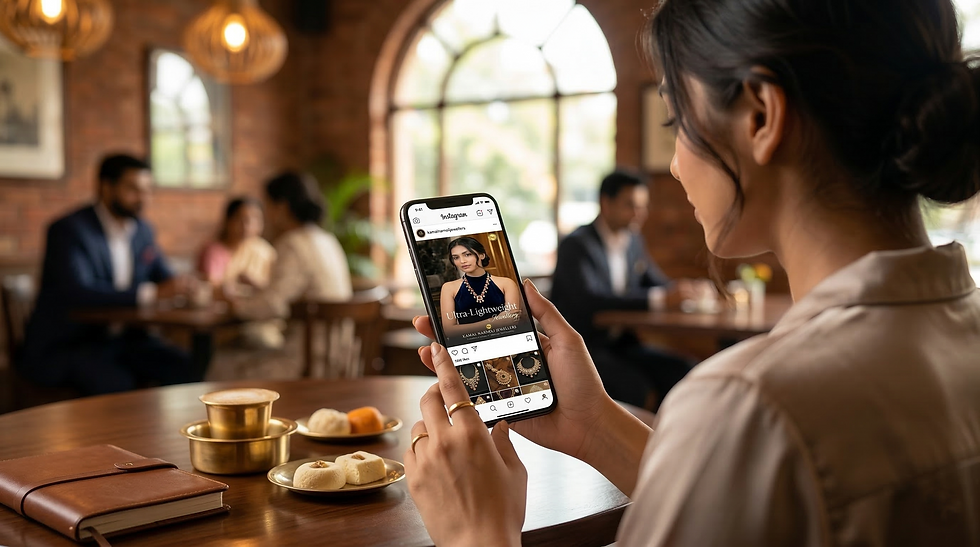
When customers see designs they like online, they are far more likely to visit the showroom to try them in person.
Host Events, Launches, and Seasonal Promotions
Jewellery buying in India is closely connected to festivals, weddings, and celebrations.
Retailers who actively organize events can significantly boost showroom footfall.
Consider hosting:
New collection launch events
Festive gold offers during Diwali, Akshaya Tritiya, and wedding seasons
Exclusive preview nights for loyal customers
Wedding jewellery showcases
These events create urgency and excitement, encouraging customers to visit the showroom sooner rather than later.
Combined with strong promotion through digital marketing jewellery campaigns, events can dramatically boost jewelry store sales during key seasons.
Build Loyalty Programs That Bring Customers Back
Many jewellery retailers focus only on acquiring new customers.
But one of the most effective ways to increase jewellery showroom sales is by encouraging repeat purchases.
A simple loyalty program for jewellery showrooms can make a huge difference.
Examples include:
Reward points on jewellery purchases
Special discounts for repeat customers
Birthday or anniversary offers
Exclusive early access to new collections
Customers who feel valued are far more likely to return to your showroom instead of visiting competitors.
Over time, this creates a steady flow of repeat showroom footfall, which is one of the most sustainable drivers of jewellery retail growth.
The Key to Consistent Footfall
Increasing showroom footfall is not about one single marketing tactic.
It’s about building a consistent presence across multiple touchpoints:
Digital discovery
Local search visibility
Social media engagement
In-store experiences
Retailers who combine these strategies effectively see a powerful result:
More visitors, better engagement, and stronger jewellery showroom sales.
But bringing customers into the showroom is only half the battle.
The real success comes from converting those visitors into buyers.
In the next section, we’ll explore proven sales strategies that help jewellery retailers turn showroom visitors into paying customers.
Proven Sales Strategies to Boost Jewellery Store Conversion Rates
Getting customers into your showroom is a big win.
But the real question is: what happens after they walk in?
Many jewellery retailers successfully increase showroom footfall, yet their jewellery showroom sales remain inconsistent. Why? Because conversion — the moment when a visitor becomes a buyer — depends on how the showroom experience is managed.
The good news is that a few strategic adjustments can dramatically boost jewelry store sales and improve your showroom’s retail turnover.
Let’s explore the sales strategies that successful jewellery retailers are using today.
Train Your Sales Team to Sell Value, Not Just Weight
One of the biggest shifts in jewellery retail is how customers evaluate value.
Earlier, most buyers focused primarily on gold weight and price per gram. Today, many customers care equally about:
Design appeal
Wearability
Budget flexibility
Versatility
This is where a well-trained sales team can make a huge difference.
Instead of saying:
"This necklace is 12 grams."
A stronger approach would be:
"This design gives the look of a traditional bridal necklace but in a lighter weight, so it stays within your budget."
This subtle shift helps customers understand the design value, which can significantly increase jewellery sales.
Handle Gold Price Objections With Smart Gold Price Hacks
Almost every jewellery retailer hears this question:
“Gold prices are too high right now… should I wait?”
If your team cannot confidently handle this objection, you may lose potential buyers.
Effective gold price hacks help reassure customers while keeping the conversation positive.
Your sales team can explain that:
Gold jewellery is not just an expense — it is an investment
Prices historically tend to rise over time
Lightweight gold jewellery allows customers to buy designs without exceeding their budget
Another effective tactic is showing multiple price options within the same design style. When customers see affordable alternatives, they feel more comfortable making a purchase decision.
Create Urgency With Limited-Edition Collections
Customers often delay jewellery purchases simply because there is no urgency.
Creating limited-time opportunities can dramatically improve conversion rates.
Some proven approaches include:
Limited-edition festive collections
Exclusive wedding-season designs
Special showroom-only jewellery launches
When customers believe a design might sell out soon, they are far more likely to buy immediately.
Retailers using this strategy often see faster retail turnover and stronger showroom momentum.
Use Smart Upselling With Matching Jewellery Sets
Upselling is one of the simplest ways to increase jewellery showroom sales without increasing footfall.
But upselling should never feel pushy. Instead, it should feel helpful.
For example, when a customer selects a necklace, the salesperson can say:
"This necklace looks beautiful on you. Would you like to see matching earrings or bangles that complete the set?"
This approach works particularly well with:
Lightweight necklace designs
Matching pendant sets
Minimalist bangles
Daily-wear gold jewellery
Customers often prefer complete jewellery looks, and when the suggestion feels natural, they are happy to add more items to their purchase.
Improve the Showroom Experience
Jewellery buying is an emotional experience. Customers don’t just buy gold — they buy celebrations, memories, and milestones.
This is why the overall showroom experience plays a huge role in conversion.
Retailers can improve customer experience by focusing on:
Comfortable seating and welcoming staff
Organized displays with clear design categories
Quick product availability from inventory
Personalized design recommendations

When customers feel relaxed and confident, they spend more time exploring your collections — and that often leads to higher jewellery showroom sales.
Turn Visitors Into Buyers
At its core, successful jewellery selling is about building trust and guiding decisions.
Retailers who focus on:
Strong product storytelling
Smart pricing explanations
Helpful upselling
Positive showroom experiences
consistently see higher conversion rates and stronger retail turnover.
Once your showroom can effectively convert visitors into buyers, the next opportunity lies in something even more powerful:
Leveraging jewellery trends to drive faster sales.
In the next section, we’ll explore the 2026 jewellery trends that are helping retailers boost showroom sales and attract modern buyers.
Leveraging 2026 Jewellery Trends to Boost Showroom Sales
Jewellery trends change faster than most retailers realize.
What sold well five years ago may still have emotional value, but it might not always deliver fast retail turnover today. Customers in 2026 are more design-aware, more price-conscious, and far more influenced by trending styles they see online.
So if you want to increase jewellery showroom sales, one powerful strategy is simple:
Stock what customers are excited about right now.
Retailers who align their collections with 2026 jewellery trends often notice something interesting — customers don’t just browse; they buy faster.
Let’s explore the trends currently shaping jewellery showroom demand.
The Strong Comeback of Yellow Gold
For a few years, minimal white gold and diamond-heavy pieces dominated urban jewellery markets.
But now, yellow gold is making a strong comeback.
Modern buyers are rediscovering the warmth and cultural connection of traditional gold, especially when it appears in fresh, contemporary designs.
Popular styles driving gold showroom sales include:
Minimalist yellow gold necklaces
Lightweight gold bangles with modern patterns
Geometric gold earrings
Stackable gold rings
These designs combine traditional gold appeal with modern aesthetics, making them attractive to both younger buyers and traditional customers.
For retailers, this trend creates an opportunity to increase jewellery sales while keeping inventory lightweight and versatile.
Lightweight Polki Jewellery Is Gaining Popularity
Polki jewellery has always been associated with grand bridal sets and heavy traditional pieces.
However, today’s designers are reimagining polki in lighter, more wearable formats.
This shift is driving demand for lightweight polki collections, especially among customers who want bridal elegance without heavy gold weight.
Trending lightweight polki pieces include:
Bridal-inspired lightweight polki necklaces
Festive polki pendant sets
Modern polki earrings for wedding functions
Layered polki chokers

Manufacturers such as Kamal Narnoli Jewellers are helping retailers access lightweight gold collections wholesale that maintain traditional beauty while using those jewellery structures designed for faster retail sales.
For retailers, these designs provide an excellent balance between luxury appeal and practical price points.
Lab-Grown Diamonds Are Expanding the Market
Another major trend influencing jewellery showroom sales in 2026 is the growing interest in lab-grown diamonds.
Younger buyers, particularly millennials and Gen Z customers, are increasingly open to these alternatives.
Why?
Because lab-grown diamonds offer:
Diamond aesthetics at lower cost
Larger stones within the same budget
A modern, innovative perception
Retailers who introduce lab-grown diamond jewellery alongside gold collections can attract a broader range of customers, especially those purchasing engagement rings or contemporary fashion jewellery.
This trend doesn’t replace traditional jewellery — instead, it expands the showroom’s product diversity and sales opportunities.
Trend-Forward Gold Designs Sell Faster
The biggest advantage of trend-driven collections is simple:
They move faster.
Customers who follow fashion trends often make quicker purchase decisions because the design already feels familiar and desirable.
Some of the fast-selling lightweight gold jewellery categories currently include:
Lightweight necklace designs for daily wear
Minimal gold chains and pendants
Contemporary bangles and stackable bracelets
Modern festive jewellery sets
Retailers who frequently introduce trend-forward gold designs keep their showrooms feeling fresh and exciting.
This helps drive:
Higher showroom engagement
Better conversion rates
Faster inventory movement
All of which directly contribute to stronger jewellery showroom sales.
Why Trend Awareness Matters for Retailers
Staying updated with jewellery trends isn’t just about fashion.
It’s about understanding what customers want before they ask for it.
Retailers who regularly update their collections with:
Lightweight gold jewellery
Trending polki designs
Contemporary gold styles
New-age diamond options
position themselves as modern, relevant, and exciting jewellery destinations.
And when customers feel that a showroom offers fresh designs and current trends, they are far more likely to return again and again.
In the next section, we’ll explore how retailers and wholesalers can strengthen B2B jewellery sales strategies and supplier partnerships to support long-term showroom growth.
B2B Jewellery Sales Optimization for Retailers and Wholesalers
Behind every successful jewellery showroom is something many customers never see:
A strong supplier relationship.
Retailers often focus heavily on display, marketing, and showroom experience — but the real engine of consistent jewellery showroom sales is the strength of their B2B jewellery supply network.
The right partnership between retailers and wholesalers can dramatically improve:
Inventory freshness
Retail margins
Design variety
Speed of product turnover
In fact, many of the fastest-growing jewellery stores today attribute their growth not just to marketing, but to smarter B2B jewellery sales optimization.
Let’s explore how retailers and wholesalers can build stronger partnerships that drive long-term showroom growth.
Build Strong Retailer–Supplier Partnerships
A jewellery supplier should not be just a vendor.
They should be a strategic partner who understands retail challenges and helps solve them.
Retailers who maintain close partnerships with their suppliers often benefit from:
Early access to new jewellery collections
Faster restocking of fast-selling designs
Better pricing through wholesale gold deals
Insights into emerging jewellery trends
These retailer supplier tips may seem simple, but they create a huge difference in how smoothly a jewellery showroom operates.
When suppliers and retailers work together closely, the result is often higher jewellery showroom sales and stronger customer satisfaction.
Negotiate Wholesale Gold Deals That Improve Margins
Profit margins play a major role in showroom success.
Retailers who regularly review their wholesale purchasing strategy often find opportunities to improve profitability without increasing retail prices.
Some practical strategies include:
Negotiating volume-based wholesale gold deals
Planning purchases around high-demand seasons
Securing better rates through long-term supplier relationships
Exploring design-based wholesale packages
These strategies help retailers maintain competitive pricing while protecting their margins — an essential factor for sustaining jewellery retail sales growth.
Tap Into Corporate Gifting Jewellery Opportunities
Another powerful but often overlooked B2B opportunity is corporate gifting jewellery.
Companies increasingly use jewellery items as premium gifts for employees, clients, and partners, especially during festive seasons.
Popular corporate gifting jewellery options include:
Lightweight gold pendants
Elegant gold coins
Minimal gold bracelets
Custom-branded jewellery pieces
Retailers and wholesalers who explore this segment can generate bulk sales opportunities, which contribute significantly to overall jewellery showroom revenue.
Choose the Right Lightweight Gold Jewellery Manufacturer
One of the most critical decisions for any retailer is choosing the right lightweight gold jewellery manufacturer.
A good manufacturing partner helps retailers access designs that are not only beautiful but also designed for retail movement.
When selecting a supplier, retailers should look for:
Consistent design innovation
Reliable supply timelines
Fast-selling jewellery collections
Strong industry experience

Manufacturers such as Kamal Narnoli Jewellers focus specifically on lightweight gold jewellery wholesale collections created for retailers who want elegant designs with faster showroom turnover.
Their collections are designed to help jewellery retailers maintain trend-driven inventory while keeping gold weight manageable, which supports better pricing flexibility for customers.
Working with the right supplier allows retailers to consistently offer gold jewellery for retailers that sells quickly and attracts modern buyers.
Strong B2B Partnerships Drive Retail Growth
At the heart of every successful jewellery business is a strong ecosystem of retailers, wholesalers, and manufacturers.
When this ecosystem works well, it creates a powerful cycle:
Manufacturers create trend-forward designs
Wholesalers distribute collections efficiently
Retailers present them to customers effectively
The result?
Faster inventory movement
Better margins
Higher customer satisfaction
Consistent jewellery showroom sales growth
And once your supplier partnerships and inventory systems are working efficiently, the next step is maximizing visibility.
In the next section, we’ll explore marketing systems that help jewellery stores attract more customers and increase overall showroom revenue.
Marketing Systems That Increase Jewellery Store Revenue
A beautiful showroom and strong inventory are essential — but without a consistent marketing system, even the best jewellery stores can struggle to maintain steady growth.
Many retailers rely only on festival seasons or walk-in customers. But in 2026, jewellery businesses that want to increase jewellery showroom sales need something more reliable:
A marketing system that consistently attracts, engages, and converts customers.
The goal is simple — make sure your jewellery showroom stays visible, memorable, and trusted in your local market.
Let’s explore the marketing strategies that help jewellery retailers generate higher turnover and consistent showroom traffic.
Build Loyalty Programs That Turn Customers Into Regular Buyers
One of the smartest ways to boost jewelry store sales is by focusing on the customers who already trust your showroom.
A well-designed loyalty program for jewellery showrooms can encourage repeat purchases and long-term relationships.
Instead of relying only on new customers, loyalty programs help retailers build a community of returning buyers.
Effective loyalty program ideas include:
Reward points on every jewellery purchase
Exclusive discounts for repeat customers
Special festive offers for loyal buyers
Early access to new jewellery collections
Customers who feel valued are far more likely to return for future purchases, recommend your showroom to others, and contribute to stronger retail turnover over time.
Use Email and WhatsApp Marketing to Stay Connected
Jewellery buying decisions often take time. A customer might visit your showroom today but purchase weeks later.
This is why consistent communication is so important.
Retailers who actively use email and WhatsApp marketing stay connected with customers even after they leave the showroom.
You can use these channels to share:
New jewellery collection launches
Festive offers and seasonal discounts
Trending lightweight gold jewellery designs
Wedding jewellery showcases
Even a simple WhatsApp update showing new lightweight necklace designs or festive gold jewellery collections can remind customers to revisit your store.
Over time, these touchpoints help maintain customer interest and increase jewellery showroom sales.
Invest in SEO to Capture High-Intent Buyers
When customers are ready to buy jewellery, many of them start with a Google search.
They type queries such as:
“Best gold jewellery showroom near me”
“Lightweight gold jewellery in Kolkata”
“Trusted gold jewellers in my city”
This is where SEO for jewelers in India becomes incredibly powerful.
Retailers who invest in SEO can attract customers who are actively looking to purchase jewellery.
Some important SEO practices include:
Optimizing your Google Business Profile
Publishing helpful jewellery blogs and guides
Using local keywords like (Location + Name) jewellers
Adding high-quality jewellery photos online
These steps improve online visibility and help retailers attract high-intent customers who are ready to visit the showroom.
Combine Offline Experience With Digital Marketing
The most successful jewellery businesses today combine traditional retail trust with modern digital marketing jewellery strategies.
Think of digital platforms as extensions of your showroom.
For example:
Instagram becomes your digital jewellery display
WhatsApp becomes your customer relationship tool
Google search becomes your customer discovery platform
Use Meta/Google ads to reach or target your genuine audience
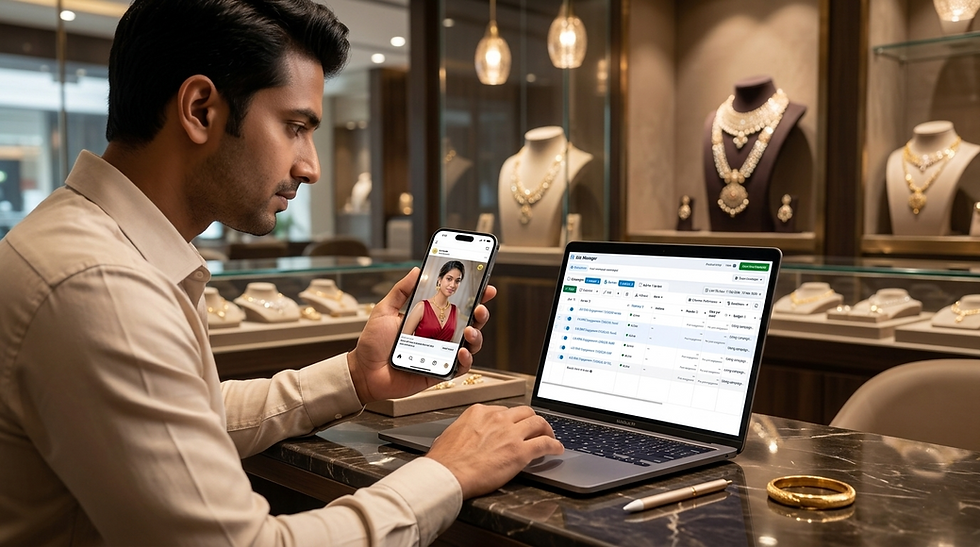
When these channels work together, they create a powerful ecosystem that consistently drives showroom footfall and increases jewellery showroom sales.
Marketing Is Not an Expense — It’s a Growth Engine
Retailers who treat marketing as a long-term investment often see the strongest results.
Consistent marketing helps jewellery businesses:
Stay visible in competitive markets
Build trust with potential buyers
Maintain steady customer traffic
Improve overall showroom revenue
And when marketing, inventory, and sales strategies work together, jewellery retailers can build a showroom that not only survives but thrives in the evolving jewellery market.
In the next section, we’ll explore how to build a high-turnover jewellery showroom model that keeps sales moving consistently throughout the year.
Building a High-Turnover Jewellery Showroom Model
At the end of the day, every jewellery retailer wants the same outcome:
Consistent sales, healthy margins, and inventory that moves regularly.
But achieving this doesn’t happen by chance. Successful retailers intentionally build what can be called a high-turnover jewellery showroom model — a system designed to keep products moving while attracting repeat customers.
Instead of relying only on occasional big-ticket purchases, these showrooms focus on steady daily sales driven by smart inventory, strong displays, and data-backed decisions.
So how can you build a showroom that consistently increases jewellery showroom sales?
Let’s explore the key elements.
Design Displays That Highlight Fast-Selling Jewellery
Your showroom display is more than decoration — it is a silent salesperson.
Customers often decide what they want to explore within the first few minutes of entering a store. If your most attractive pieces are hidden or mixed randomly, you may lose valuable sales opportunities.
Successful jewellery showrooms organize displays around customer demand and fast-moving designs.
Consider highlighting:
Fast-selling lightweight gold jewellery collections
Daily-wear gold jewellery
Trending lightweight necklace designs
Festive and bridal jewellery sections
Retailers who dedicate specific display zones to lightweight gold jewellery often notice that customers gravitate toward those sections first because the designs feel modern, affordable, and wearable.
The easier it is for customers to explore your collections, the easier it becomes to increase jewellery sales.
Create a Sales-Focused Showroom Experience
Customers rarely walk into a jewellery store with a fixed decision. Most of the time, they are exploring possibilities.
Your showroom experience should gently guide them toward a purchase.
This means creating an environment that feels:
Comfortable and welcoming
Easy to navigate
Focused on showcasing designs clearly
Small details can make a huge difference:
Organized jewellery trays instead of overcrowded displays
Quick access to different price ranges
Sales staff who recommend designs based on customer preferences
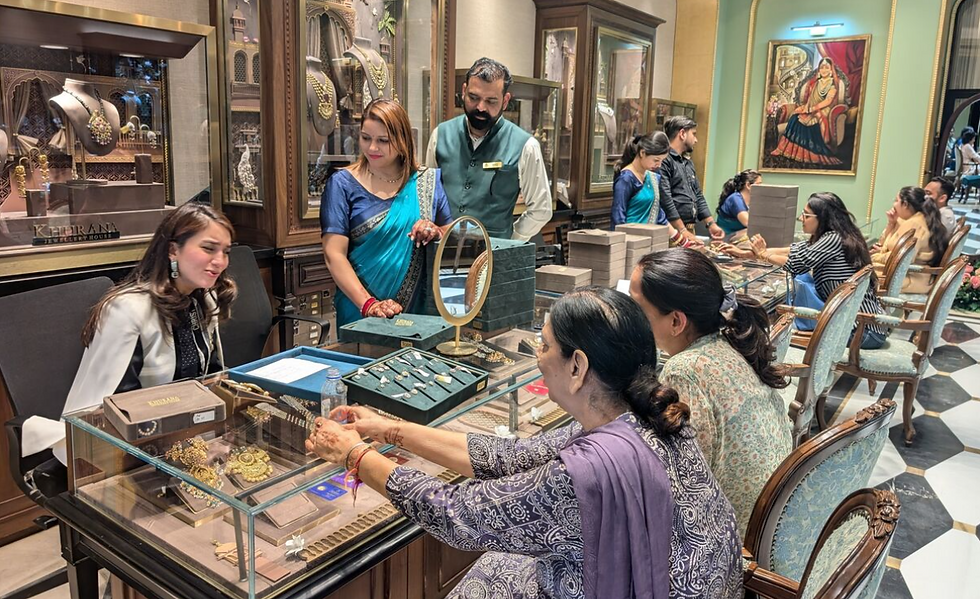
When customers feel relaxed and confident, they are more likely to spend time exploring and eventually making a purchase — which directly improves jewellery showroom sales performance.
Use Data to Guide Inventory and Sales Decisions
Many jewellery retailers still rely heavily on instinct when planning inventory.
While experience is valuable, combining it with data-driven insights can significantly improve retail results.
Tracking simple metrics can reveal powerful patterns, such as:
Which designs sell fastest
Which price ranges attract the most buyers
Which collections generate repeat purchases
Which items remain unsold for long periods
Retailers who analyze these insights can optimize their inventory optimization strategy and ensure they stock more of what customers actually want.
This leads to higher retail turnover and fewer slow-moving pieces.
Keep Collections Fresh With Regular Updates
One common mistake jewellery retailers make is leaving the same designs in the showcase for too long.
Customers who visit multiple times want to see something new.
Regularly refreshing your jewellery collection keeps your showroom exciting and encourages repeat visits.
Effective approaches include:
Introducing new trend-forward gold designs every season
Rotating jewellery displays every few weeks
Highlighting new lightweight gold jewellery collections
Launching special festive collections
When customers know that your showroom frequently introduces fresh designs, they are more likely to return — which naturally helps increase jewellery showroom sales over time.
The Goal: Consistent Sales Momentum
A high-performing jewellery showroom doesn’t depend on occasional large purchases.
Instead, it builds consistent sales momentum through:
Fast-moving inventory
Attractive displays
Customer-focused showroom experiences
Smart inventory and marketing decisions
When these elements work together, retailers create a powerful cycle:
Fresh designs attract customers → customers explore more → more purchases happen → inventory moves faster → new collections arrive.
This cycle is the foundation of a jewellery showroom that continues to grow even in a competitive market.
And when your showroom operates with this kind of momentum, increasing jewellery showroom sales becomes not just a goal — but a natural outcome.
Conclusion
Increasing jewellery showroom sales in 2026 is no longer about relying on luck, seasonal demand, or simply stocking more gold. The jewellery market has evolved, and so have customer expectations.
Today’s buyers are smarter, more research-driven, and more focused on design, value, and experience than ever before. They explore designs online, compare options, and enter showrooms with clearer expectations. For retailers and wholesalers, this means that success depends on how well you adapt to these changes.
Ask yourself a few important questions:
Is your showroom stocked with fast-selling lightweight gold jewellery that fits modern budgets?
Are your collections aligned with 2026 jewellery trends that customers are actively searching for?
Are you using smart sales strategies and inventory optimization to improve retail turnover?
Is your showroom visible online when customers search for jewellery stores in your city?
Retailers who focus on these factors consistently see stronger results. By combining trend-driven inventory, effective jewellery store marketing, stronger supplier partnerships, and a better showroom experience, you can create a system that steadily increases jewellery showroom sales instead of relying on occasional high-value purchases.
Remember, the goal is not just selling jewellery — it’s building a showroom that customers trust, revisit, and recommend.
Small improvements in inventory strategy, showroom experience, and marketing visibility can gradually transform your jewellery business into a high-turnover retail destination.
And when it comes to sourcing collections that are designed for retail movement, partnering with reliable manufacturers can make a significant difference — Kamal Narnoli Jewellers offers lightweight gold jewellery collections created specifically to help retailers achieve faster showroom sales.
As the jewellery industry continues to evolve, the retailers who stay proactive, embrace trends, and refine their strategies will be the ones who turn every showroom visit into a lasting customer relationship — and every collection into a successful sale.
Frequently Asked Questions (FAQs)
1. How can jewellery retailers increase showroom sales in 2026?
Retailers can increase jewellery showroom sales by focusing on fast-selling lightweight gold jewellery, optimizing inventory, improving showroom experience, training sales teams, and using digital marketing strategies that consistently drive showroom footfall.
2. What type of jewellery sells fastest in jewellery showrooms today?
Fast-selling jewellery today includes lightweight gold jewellery, minimalist necklace designs, daily-wear chains, modern bangles, and lightweight polki collections because customers prefer elegant designs that look premium while staying within comfortable budgets.
3. How can jewellery showrooms increase customer footfall?
Jewellery showrooms can increase footfall through local SEO, Google Business optimization, Instagram jewellery showcases, WhatsApp catalog sharing, festive promotions, and consistent digital marketing that helps customers discover the store online.
4. Why is lightweight gold jewellery becoming more popular?
Lightweight gold jewellery is popular because rising gold prices encourage customers to choose designs that offer style, affordability, and versatility, allowing them to buy beautiful jewellery without committing to heavy gold weight.
5. Why are supplier partnerships important for jewellery retailers?
Supplier partnerships help retailers access trend-forward designs, faster restocking, better wholesale pricing, and consistent inventory flow, allowing jewellery showrooms to maintain fresh collections and improve retail turnover.
6. How can wholesalers help retailers increase jewellery sales?
Wholesalers support retailers by offering fast-selling collections, competitive wholesale gold deals, and trend-driven jewellery designs. Many retailers prefer working with a leading lightweight gold jewellery manufacturer like Kamal Narnoli Jewellers
7. What marketing strategies work best for jewellery stores today?
Effective jewellery marketing strategies include social media promotion, WhatsApp customer engagement, Google search visibility, festive campaign promotions, and helpful content marketing that builds trust while attracting new customers to the showroom.
8. How often should jewellery showrooms update their collections?
Jewellery showrooms should update collections regularly, ideally every season or few months, introducing new designs and trending jewellery styles to keep displays fresh and encourage repeat showroom visits from customers.


Comments